Lorem ipsum dolor sit amet, consectetur adipiscing elit. (Sed )do eiusmod tempor incididunt ut labore et dolore magna aliqua.

X

Type your keyword below

How a Modern SIS Transforms Student Experience in Higher Education

According to a report, 33% of students say they are disappointed with student administration systems.

https://www.highereddive.com/news/report-finds-students-underwhelmed-by-campus-administration-systems/440367/?utm_source=chatgpt.com

Many students today feel let down by outdated campus administration systems. Such inefficiencies not only frustrate learners but can also erode trust and even lead to higher dropout risks.

In an era where digital convenience is the norm, students expect their academic journey to be as seamless as their everyday apps—from quick enrollment to real-time access to grades and schedules. When institutions fail to deliver this, the student experience suffers.

This is where a modern Student Information System (SIS) makes a difference. Beyond serving as a database, it transforms how institutions manage, communicate, and support students, ensuring smoother interactions and stronger engagement at every stage of the academic lifecycle.

The Shift Toward a Student-Centric Model

Higher education is moving away from institution-centric processes and focusing instead on the student journey. Modern learners are digital natives, accustomed to real-time communication, personalized recommendations, and mobile-first experiences. If universities fail to deliver on these expectations, student satisfaction and retention can suffer.

A modern SIS helps bridge this gap by providing:

  • Self-service portals for students and parents. 
  • Mobile accessibility for anytime, anywhere engagement. 
  • Data-driven personalization to tailor academic experiences. 

By putting students at the center, institutions not only improve outcomes but also strengthen long-term relationships with learners.

Streamlining the Student Lifecycle

1. Simplified Admissions

Traditionally, admissions involve endless forms, long queues, and unclear communication. A modern student management system automates this process—students can apply online, upload documents, track application status, and receive instant notifications. Institutions benefit from faster processing and higher conversion rates.

Also read: To learn the secret of how admissions are simplified: 

https://www.academiaerp.com/blog/simplifying-admissions-how-sis-reduces-enrollment-friction/

2. Personalized Learning Pathways

Once enrolled, students expect guidance in choosing courses and planning their academic journey. A robust student management system uses analytics to recommend courses, prevent scheduling conflicts, and even flag early signs of academic struggle. 

This fosters personalized support, ensuring no student is left behind.

3. Transparent Academic Progress

Grade tracking, exam schedules, and attendance records often create frustration when handled manually. With an SIS, students can view progress in real time, while faculty can provide timely feedback. Transparency reduces confusion and builds trust between students and the institution.

4. Connected Campus Experience

Beyond academics, students interact with multiple touchpoints—hostel services, fee payments, placements, and alumni networks. A comprehensive academic ERP centralizes these, creating a connected campus experience where students feel supported at every step.

Enhancing Engagement Through Technology

Today’s students expect engagement that mirrors the digital world they live in. A modern SIS supports this by:

  • Mobile-first accessibility: With smartphone penetration exceeding 46% in Sub-Saharan Africa (Statista), mobile platforms are key to student engagement. 
  • AI-powered insights: From predicting dropouts to automating grading, AI integrated within SIS platforms improves efficiency and outcomes. 
  • Integrated communication: Notifications, reminders, and updates ensure students stay connected with their institution in real time. 

This not only improves satisfaction but also strengthens retention rates—an essential factor in institutional success.

Driving Institutional Efficiency and Student Success

While the student experience is the focus, institutions benefit equally. By reducing manual work, administrators can redirect energy toward academic innovation and student support. Moreover, data centralization empowers leadership with insights for policy-making, accreditation, and global competitiveness.

For instance, UNESCO highlights that data-driven decision-making in education significantly improves both student outcomes and institutional performance. A modern SIS makes this data not only accessible but actionable.

Also Read:

https://www.academiaerp.com/blog/7-powerful-ways-an-sis-boosts-university-efficiency/

Conclusion

Student expectations are evolving rapidly, and higher education must evolve with them. A modern Student Information System transforms the student experience by simplifying admissions, personalizing learning, improving transparency, and creating a connected digital campus. For institutions, it means less paperwork, more efficiency, and data that drives smarter decisions.

In today’s competitive landscape, delivering a seamless student experience is not optional—it’s essential.

Ready to reimagine student experience at your institution? Book a Demo with our experts today and explore how our Academia SIS can help you build a truly student-centric campus.

Tap on the link below-

https://www.academiaerp.com/contact/


How AI-Powered SIS is Reshaping Higher Education in 2025

Introduction: A Campus Leader’s Struggle

Imagine at a higher ed institution in the Middle East, Dr. Kareem, the Dean of Administration, found himself buried under endless paperwork. Attendance records were inconsistent, student queries piled up unanswered, and generating performance reports often consumed weeks of his team’s time. 

Despite rapid growth, the institution was slowed by outdated, manual processes. That’s when the institution decided to transform with an AI-powered Student Information System (SIS) — and everything changed.

Across higher education, manual administration is draining time and resources. In fact, teachers spend an average of 13 hours weekly on non-instructional tasks that could easily be automated (EdWeek Research Center). Institutions are now realizing that the future lies in smarter, AI-driven campus management.

The Current State of Higher Ed Administration

Despite technological advancements, many universities still rely on manual systems or disconnected tools. This leads to:

  • Data inefficiencies — Student data scattered across spreadsheets and files.
  • Low productivity — Manual processes reduce institutional efficiency by up to 30% (EDUCAUSE research).
  • Student dissatisfaction — Delays in communication, admissions, or exam processing frustrate students and parents alike.

In today’s digital-first era, higher ed institutions can no longer afford inefficiencies. They need systems that are not just automated but intelligent.

What Is an AI-Powered SIS?

A Student Information System (SIS) streamlines student data, academic workflows, and overall campus management. But when enhanced with artificial intelligence, an SIS evolves into a powerful digital campus enabler.

AI-Powered SIS platforms, like Academia, go beyond automation by providing:

  • Predictive insights for decision-making.
  • Personalized student experiences.
  • Reduced administrative burden.

It’s not just about replacing paper—it’s about reimagining education management for the future.

Core AI Capabilities in Academia SIS

With Academia’s AI-driven SIS, institutions unlock features that directly improve operational efficiency and student outcomes:

  • Personal AI Assistant for Every Student – Students get instant answers to queries about courses, attendance, fees, and more.
  • Automated Remark Generation in Mark Sheets – AI generates personalized, meaningful remarks based on performance, saving faculty hours of manual effort.
  • AI-Integrated Email Automation – Institutions can send tailored communication campaigns at scale without human intervention.
  • AI-Driven Report Generation – From attendance summaries to financial performance reports, AI produces accurate, actionable insights in seconds.

Real-World Impact: UNISCED’s Transformation

Take the case of UNISCED in Mozambique, which faced inefficiencies across admissions and student records. By adopting Academia SIS, they achieved:

  • Simplified, centralized student management processes.
  • Faster report generation and analytics.
  • Enhanced visibility across all departments.
  • Improved efficiency and faculty productivity.

This success story is not an exception—universities worldwide are adopting similar transformations.

Benefits for Universities

By automating repetitive tasks, institutions free up resources to focus on teaching, research, and enhancing student success. 

With Academia SIS, higher education institutions gain:

  • Operational Efficiency – Faster processes across admissions, attendance, exams, and finance.
  • Enhanced Student Engagement – Personalized communication improves student satisfaction.
  • Data Accuracy & Compliance – AI ensures clean, reliable data that meets regulatory standards.
  • Smarter Decision-Making – Administrators access predictive analytics to plan resources, budgets, and academic outcomes.

The Future of Higher Education with AI & ERP

AI in SIS is just the beginning. The future points toward:

  • Predictive Analytics – Forecasting enrollments, dropouts, and performance trends.
  • Personalized Learning Journeys – Custom pathways for students based on strengths and interests.
  • Digital Campus Ecosystems – Full integration of LMS, finance, HR, and student engagement tools.

According to HolonIQ, global EdTech investments are projected to exceed $400 billion by 2030, with AI leading innovation. Universities that embrace these technologies early will stand out as future-ready institutions.

Conclusion: From Struggle to Success

Remember Dr. Kareem from Al Noor University? After implementing Academia SIS, his team cut administrative work hours by nearly half, improved student satisfaction scores, and freed up faculty to focus on what mattered most — teaching and research.

The lesson is clear: Higher education is no longer about managing students; it’s about empowering them with intelligent systems.

Ready to see how Academia can power your institution’s digital campus journey? 

Book a free demo today.

The Financial and Operational Risks of Using Legacy ERP in Higher Education

“Organizations that fail to modernize their technology infrastructure will find themselves at a competitive disadvantage, especially in an era where agility and data-driven decision-making are paramount.” — Gartner Research

In a car race, if a contestant is asked to compete with a bicycle, it is quite obvious what will be its result.

Similarly, in today’s competitive landscape, where agility, speed, and flexibility have taken the front seat, most institutions have understood that the secret to success and continued growth lies in embracing technology. 

Across higher education institutions, outdated ERP systems are silently draining budgets and slowing down operations—putting long-term sustainability at serious risk. While these systems once represented cutting-edge technology, they’ve evolved into expensive anchors that prevent universities from adapting to modern educational demands.

If you are also one of those still relying on traditional manual practices to manage institutional operations, I suggest to read till the end. You never know, this one blog could be a head start to your digital transformation journey. 

The Hidden Financial Toll of Outdated Systems

Legacy ERP systems in higher education carry costs that extend far beyond their annual maintenance fees. According to EDUCAUSE’s 2024 IT Issues Survey, institutions spend an average of 18% more on IT operations when relying on systems over a decade old compared to those using modern platforms.

The financial burden manifests in several critical areas. First, maintenance costs increase as systems age. Vendors gradually phase out support for older versions, forcing institutions to pay premium rates for extended support contracts. Moreover, finding skilled technicians who can work with legacy systems becomes increasingly expensive as these professionals become scarcer in the job market.

Custom modifications present another financial challenge. As universities’ needs evolve, they often require expensive customizations to make legacy systems accommodate new processes. These modifications not only cost substantial upfront investments but also create ongoing maintenance nightmares that can triple future upgrade costs.

Furthermore, integration expenses multiply when legacy systems struggle to communicate with modern applications. Universities end up maintaining multiple platforms and manual workarounds, effectively paying for the same functionality across different systems while creating data silos that impede decision-making.

Operational Inefficiencies That Compound Over Time

Beyond direct costs, legacy ERP systems create operational inefficiencies that compound annually. These platforms typically process transactions more slowly than modern alternatives, requiring staff to invest more time in routine tasks. For instance, generating comprehensive financial reports that take minutes on contemporary systems can require hours or even days on legacy platforms.

Data accuracy becomes increasingly problematic as manual workarounds multiply throughout aging systems. Staff members often resort to spreadsheet-based processes to bridge functionality gaps, introducing human error opportunities and creating inconsistent data across departments. This fragmentation prevents institutions from maintaining the single source of truth that modern educational administration demands.

Additionally, legacy systems limit scalability options. As universities expand their programs, increase enrollment, or add new campuses, outdated ERP platforms struggle to accommodate growth without significant performance degradation. This limitation forces institutions to either accept reduced efficiency or invest in expensive hardware upgrades that merely postpone inevitable modernization decisions.

Security Vulnerabilities in Educational Technology

Perhaps most concerning, legacy ERP systems expose higher education institutions to escalating security risks. The FBI’s Internet Crime Complaint Center reports that educational institutions experienced a 300% increase in cybersecurity incidents between 2020 and 2023, with outdated systems representing primary attack vectors.

Older systems frequently lack modern security protocols, making them vulnerable to sophisticated cyber attacks. They may not support current encryption standards, multi-factor authentication, or advanced threat detection capabilities that have become standard in contemporary platforms. This vulnerability is particularly problematic for universities, which maintain vast databases of sensitive student information, research data, and financial records.

However, the security challenge extends beyond external threats. Legacy systems often lack comprehensive audit trails and user access controls, making it difficult to track who accessed what information and when. 

Consequently, institutions using legacy ERP systems may face regulatory penalties, reputation damage, and costly breach remediation efforts that far exceed modernization investments.

The Compliance and Reporting Challenge

Modern higher education operates under increasingly complex regulatory requirements, from financial reporting standards to student privacy protections. Legacy ERP systems often struggle to generate the detailed reports and documentation that contemporary compliance demands require.

For example, institutions must provide increasingly granular financial reporting to accreditation bodies, state agencies, and federal programs. Legacy systems may lack the data categorization capabilities or reporting flexibility necessary to meet these evolving requirements without extensive manual intervention.

This reporting challenge becomes particularly acute during audit periods, when institutions must demonstrate comprehensive financial controls and data integrity. Legacy systems may require staff to compile information from multiple sources, increasing both the time investment and error probability in critical compliance activities.

Strategic Limitations in Competitive Markets

Today’s higher education landscape demands agility and data-driven decision-making capabilities that legacy ERP systems simply cannot support. Universities need real-time insights into enrollment trends, financial performance, and operational efficiency to remain competitive in an increasingly challenging market.

Legacy systems typically offer limited analytics capabilities, preventing administrators from identifying opportunities or addressing challenges proactively. They may lack the integration capabilities necessary to connect with modern student information systems, learning management platforms, or customer relationship management tools that drive contemporary educational operations.

This technological limitation translates into strategic disadvantages. Universities using legacy systems often find themselves reacting to market changes rather than anticipating them, missing opportunities to optimize operations, improve student experiences, or identify new revenue streams.

Final Thoughts: Building a Foundation for Future Success

The path forward requires recognizing that modern ERP implementation represents an investment in institutional sustainability rather than merely a technology upgrade. Contemporary educational ERP platforms offer cloud-based scalability, advanced security protocols, comprehensive analytics capabilities, and seamless integration options that transform operational efficiency.

Institutions that proactively address their legacy system challenges position themselves to thrive in an increasingly competitive educational environment. They reduce operational costs, improve security postures, enhance compliance capabilities, and gain the strategic insights necessary to make informed decisions about their institutional futures.

Ready to transform your institution’s operational efficiency and reduce financial risks? Our education-focused ERP solutions are designed specifically for higher education’s unique challenges and opportunities. Book a personalized demo today to discover how modern ERP technology can strengthen your institution’s foundation for long-term success.

Manual Entry Overloading Your Admissions and Fee Collection? Here’s What Institutions Must Know in 2025

Overview-

On average, every person forgets four things a day, according to a UK-based report.

Who’s the culprit behind this?

Undoubtedly, this is due to “the way lives are getting busier with each passing day”.

Assuming you are the administrative officer or a concerned higher authority in a higher educational institution.

Maintaining records, tracking payments, generating accurate receipts, and sending reminders to those with outstanding balances – all of this is performed manually.

Meanwhile, the admission season arrives, bringing along an ocean of paperwork, starting from the creation and distribution of admission forms, to application tracking and management, to documentation, and much more.

Overwhelmed? Confused? Frustrated? Exhausted?

Now, considering the permanent reservation of “human errors” along with the possibility of forgetting chores, as mentioned above, these crucial tasks of admission and fee collection will surely get compromised somewhere during the execution.

Overlooking payments, misplacing tuition fee receipts, improper fulfillment of admission forms, poor record keeping, etc., a lot of such things can result in confusion, disputes, and loss.

Would that scenario or its consequences be equally normal as above? Absolutely not!!

Your institution’s finances, data, and most importantly, the institution’s reputation are at stake!

A Question You Should Ask Yourself-

“Why are we still stuck with spreadsheets and physical registers in an era of AI and automation?”

Manual data entry has long been the silent productivity killer for educational institutions, especially during peak admission seasons and fee collection cycles.

But here’s the hard truth: Manual processes aren’t just outdated—they’re costing you time, money, and trust.

Let’s dive into how manual entry overload in admissions and fee collection creates bottlenecks and explore how academic institutions can leap into a more agile, error-free future, adopting a technology-equipped student information system.

The Real Cost of Manual Data Entry in Admissions-

Every academic year, institutions face a massive influx of student applications. From capturing personal details to validating certificates, every piece of data is crucial.
But what happens when this process is done manually?

•Data Duplication: Feeding the same student data more than once due to the lack of validation.
•Time Drain: Each form takes 5–10 minutes of data entry. Multiply that by thousands.
•Human Error: Even a small error while entering the applicant’s name or in ID proof submission can cause administrative chaos later on.

“We spent more time correcting errors than processing applications,” says an administrator at a leading college in India.

Manual admissions are not scalable. As institutions grow, so does the complexity of managing applicant data—unless you automate.

How Does The Solution–Academia Help?

The Admission Management module of the student ERP–Academia automates the complete admission process of applicants through its unparalleled functionalities.

It allows institutions to effortlessly customize the admission forms, as per their requirements, while empowering students to upload documents and track their application’s progress easily.

• Streamline admissions by defining multiple stages, simplifying fee collection at each level.
• Bulk upload applicant data using a customized template designed to save time and ensure accuracy.
• Go mobile-first with complete admission management from your tablet or smartphone.
• Easily embed a configurable enquiry form on your website to capture leads seamlessly.
• Design and send personalized offer letters, with approval workflows handled entirely through the portal.
• Set required and optional document checklists, and collect submissions directly via the online portal.

Are cybersecurity concerns keeping you up at night?
Read our latest blog to discover how Academia keeps your data miles away from getting attacked.
https://www.academiaerp.com/blog/the-ultimate-cybersecurity-strategy-for-higher-ed-institutions-in-2025/

The Hidden Challenges in Manual Fee Collection-

It’s not just admissions where things go sideways—fee collection is another minefield.
Here’s what manual fee management often involves:

• Maintaining physical registers or Excel sheets–demanding proper storage and extra time & effort.
• Manual reconciliation of bank payments
• Sending fee reminders via email or phone
• Tracking late payments across departments

This fragmented, non-centralized process can result in:

These fragmented, non-centralized fee-collection processes carry higher possibilities of revenue leakage due to untracked payments, delayed fund reconciliation with the accounts team, and students’ turn-off due to receiving erroneous receipts.

How Academia Ensures Fee Collection is Simplified & Accurate?

The fee management module of the student ERP– Academia empowers institutions to manage all fee-related activities, saving a major chunk of time and effort.

• Create tailored fee plans for admissions, programs, and exams, and link them to their respective modules to minimize errors and oversights.

• Easily manage complex fee structures, including late payment penalties, discounts, and scholarships—all in one place.

• Automate invoice generation at key stages of the student lifecycle to ensure timely and accurate billing.

Special Features for Admissions & Fees:

• Dynamic online admission forms
• Integrated payment gateways (Razorpay, PayU, Stripe, etc.
• Customized fee heads and structures
• Auto-generated invoices and receipts
• Daily transaction and payment reconciliation reports

The Future is Automated: Top Benefits of Switching to Academic ERP

So, what does automation solve? Practically everything.

• Faster admissions with online forms auto-integrated into the system
• Error-free fee tracking with real-time dashboards
• Instant alerts for late payments or document uploads
• Secure cloud storage of student data
• Audit-ready records for finance and compliance teams
• Parent portals to improve communication and reduce admin queries

“Our staff now focuses on student engagement, not paperwork,” shares a principal from a leading international school after switching to an ERP.

Wrapping Up Thoughts-

In 2025, educational excellence goes beyond the classroom. Operational efficiency, transparency, and error-free experiences form the backbone of a credible institution.
Manual data entry may have worked a decade ago, but today, it’s a bottleneck you can’t afford.

Switching to Academia ERP doesn’t just digitize your operations—it humanizes them. It frees your staff to do what they do best: engage, educate, and elevate.

So the next time you see your admin staff buried under heaps of paper or stuck fixing Excel sheet errors, ask yourself—Isn’t it time for a better way?

Modern Student Information Systems: How AI & Predictive Analytics are Transforming Higher Ed

In the ever-evolving world of higher education, institutions face pressure to improve student outcomes, streamline operations, and stay ahead of technological advancements. One of the most powerful ways to address these challenges is by integrating Artificial Intelligence (AI) and Predictive Analytics in Student Information Systems (SIS). As AI continues to reshape industries, its potential in education is immense—offering solutions for enhanced decision-making, personalized student success tracking, and improved administrative efficiency.


According to recent reports, 80% of higher education institutions believe AI will be key in improving operational efficiency and student experiences in the next five years. AI-powered SIS is leading the way with institutions striving to be more data-driven and proactive.

Let’s dive into how AI and predictive analytics are used by Student Information Systems and know why your institution should consider adopting these technologies.


How AI Transforms Student Information Systems

AI is more than just a buzzword—it’s a game-changer in education. Traditional SIS relies heavily on manual processes, which can lead to inefficiencies and errors. AI automates administrative tasks, from managing student data to grading and tracking performance, which frees faculty and staff to focus on more strategic initiatives.


A study by EDUCAUSE found that AI in education can save institutions up to 30% of administrative costs by automating routine tasks. AI also improves the accuracy of student data and reduces human error. By analyzing patterns across vast datasets, AI tools help institutions better understand their students’ needs, improving the overall quality of service and experience.

AI-driven systems can also provide real-time insights into how students are performing academically. For example, AI can flag students struggling in real-time, alerting instructors or advisors to intervene before problems escalate. This proactive approach saves time and can significantly boost student success rates.


Predictive Analytics for Boosting Student Retention

Student retention remains a critical challenge for higher education institutions. With rising tuition fees and increasing competition, institutions must focus on keeping students enrolled and engaged. Predictive analytics is a key tool in this effort.


By leveraging historical data—such as attendance, grades, and engagement metrics—predictive analytics can forecast which students may be at risk of dropping out or underperforming. According to a McKinsey & Company report, universities that use predictive analytics have seen retention rates improve by up to 15-20%. With these insights, institutions can offer targeted interventions, such as tutoring, counseling, or mentorship, to support at-risk students and improve their chances of success.


Moreover, predictive analytics can help colleges/universities optimize their programs by analyzing student preferences and predicting future demand for courses, majors, and campus facilities. This data-driven approach allows institutions to align resources with student needs, enhancing student experience.


Intelligent Reporting for Smarter Decision-Making

In today’s fast-paced educational environment, decision-makers need immediate access to reliable, data-driven insights. Traditional reporting methods require manual effort, resulting in delayed or incomplete information. On the other hand, AI-powered SIS generates dynamic, intelligent, real-time reports, offering decision-makers access to up-to-date insights that can guide critical decisions.


For instance, AI can track key metrics such as student enrollment, financial aid status, and course performance, providing a clear picture of institutional health. This data can be used to identify trends, improve resource allocation, and spot potential problems early. 60% of educational leaders believe real-time data analytics significantly improves campus decision-making.


With AI-driven reporting, institutions can stay on top of evolving trends and quickly respond to challenges, ensuring that resources are always deployed where needed.


Why Your Institution Needs an AI-Powered SIS

As more institutions embrace digital transformation, adopting AI-powered SIS is becoming increasingly essential. By integrating AI and predictive analytics into your SIS, you can enhance decision-making, optimize student retention, and improve operational efficiency—all of which contribute to a more personalized and impactful educational experience.


Moreover, AI-powered systems provide long-term cost savings, streamline workflows, and empower administrators, faculty, and staff to focus on their core mission: supporting students’ success. Institutions that embrace this technology will improve their bottom line and foster an environment of innovation and student-centered learning.


Ready to See How It Works? Try a Free Demo Today

The future of student information systems is here, and AI and predictive analytics power it. Ready to experience the benefits of AI & predictive analytics in action? Request a free demo today and see how an AI-powered SIS can enhance decision-making, boost retention, and drive institutional success.


As institutions continue to navigate an increasingly complex educational landscape, AI will undoubtedly play a pivotal role in shaping the future of higher education. Don’t let your institution fall behind—embrace the future with an AI-powered Student Information System today.

Academia ERP Shines at e-Learning Africa 2024 in Kigali, Rwanda

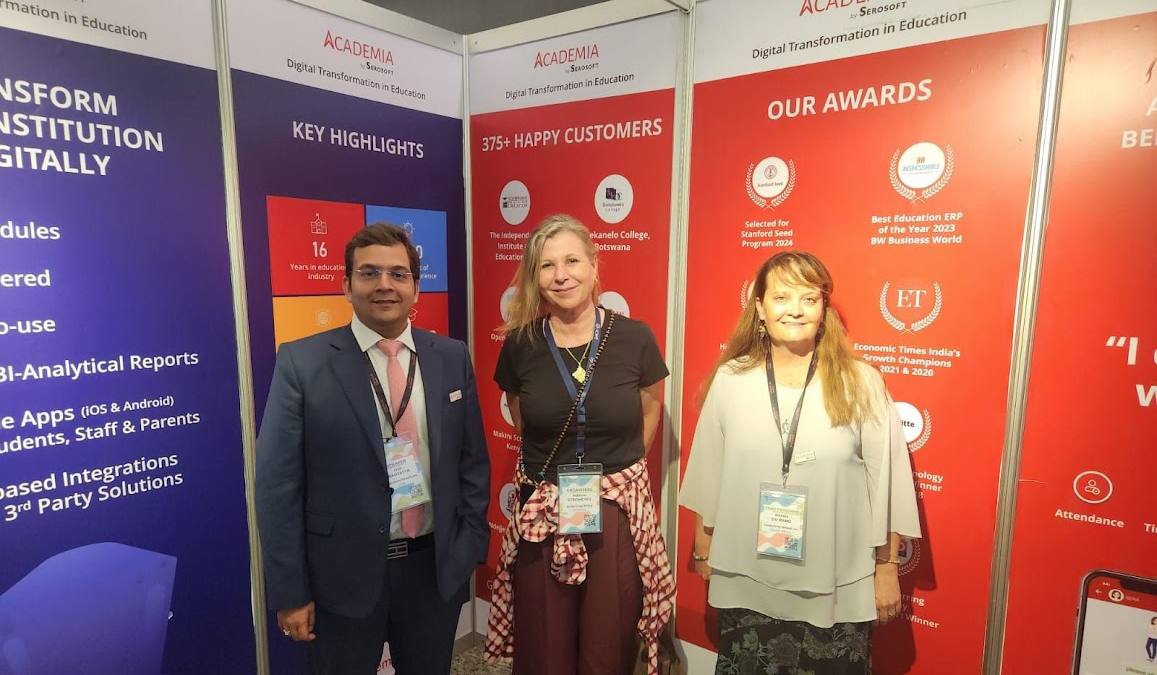
Kigali, Rwanda – June 2024 – Academia ERP, a leading provider of comprehensive ERP solutions for educational institutions, proudly participated in e-Learning Africa 2024, held from May 29-31, 2024, at the Kigali Convention Centre, Rwanda. The event brought together experts and innovators in the field of e-learning and showcased cutting-edge technologies transforming education across Africa.

Representatives from Academia ERP included Founder & CEO Arpit Badjatya,

Kigali, Rwanda – June 2024 – Academia ERP, a leading provider of comprehensive ERP solutions for educational institutions, proudly participated in e-Learning Africa 2024, held from May 29-31, 2024, at the Kigali Convention Centre, Rwanda. The event brought together experts and innovators in the field of e-learning and showcased cutting-edge technologies transforming education across Africa.

Representatives from Academia ERP included Founder & CEO Arpit Badjatya, Manager of Sales – Sanchit Baweja, and VP of Customer Success – Michele Du Rand. Their presence at the event was met with great appreciation, as they engaged with educators, policymakers, and industry leaders from across the continent. Academia ERP’s products received high praise for their ability to address the unique challenges faced by African educational institutions, demonstrating the company’s deep understanding of the African education market.

A highlight of the event was an insightful session delivered by Arpit Badjatya, titled “Digital Transformation through AI in Education.” In his presentation, Arpit discussed the transformative potential of artificial intelligence in enhancing educational experiences and operational efficiency. His session attracted a large audience and sparked engaging discussions on the future of digital education in Africa.

eLearning Rwanda Event


eLearning Rwanda Event

“We are thrilled to be part of e-Learning Africa 2024 and to have the opportunity to share our expertise and innovations with such a diverse and dynamic audience,” said Arpit Badjatya, Founder & CEO of Academia ERP. “Our commitment to understanding the unique needs of the African education market has enabled us to develop tailored solutions that truly make a difference.”

Academia ERP stands out as one of the few companies from Asia in the IT domain that has extensively researched the African education sector. This deep knowledge allows Academia ERP to provide solutions that are not only technologically advanced but also culturally and contextually relevant. Their participation in e-Learning Africa 2024 underscores their dedication to supporting the digital transformation of education on the continent.

For more information about Academia ERP and its innovative solutions, please visit https://www.academiaerp.com/our-events/

About Academia ERP: Academia by Serosoft is an award-winning, AI-powered, analytics-equipped, flexible, and feature-rich Educational ERP / Student Information System. Tailored for Universities, Colleges, Schools, and Training Institutions, Academia includes 40+ modules and powers 375+ institutions across 28 countries. Serving over 1 million students, Academia is a pioneer in digital transformation in Education.

Contact: 

Marketing Team Academia ERP 

Email: contact@serosoft.com

Contact: +91 9993577766

3 Key Insights into Higher Education in MENA: A Personal Journey

Traversing the terrain of higher education in the Middle East and North Africa (MENA) region reveals many experiences, challenges, and revelations. As a student immersed in this vibrant environment, I’ve garnered profound lessons illuminating the nuances of pursuing tertiary education in MENA. Here, I share three pivotal insights that have profoundly influenced my journey, highlighting the strategic role of Academia ERP/SIS in navigating the intricacies of higher education in the region.

  1. Celebrating Diversity:

At the heart of higher education in MENA lies a rich tapestry of diversity, encompassing myriad cultures, languages, and perspectives. Academia ERP/SIS catalyzes embracing this diversity, fostering a dynamic learning ecosystem where students from diverse backgrounds converge. Academia ERP/SIS nurtures an inclusive environment conducive to cross-cultural exchange and mutual understanding by facilitating seamless communication and collaboration among students and faculty.

  1. Overcoming Challenges:

While higher education in MENA offers immense opportunities for growth and advancement, it is not without its challenges. Here, Academia ERP/SIS emerges as a strategic ally in navigating bureaucratic hurdles, administrative inefficiencies, and resource constraints. Academia ERP/SIS empowers students to overcome obstacles with resilience and determination by streamlining administrative processes, optimizing resource allocation, and enhancing transparency.

  1. Cultivating Innovation:

In an era of rapid technological advancements and evolving societal needs, fostering innovation within higher education institutions is paramount. Academia ERP/SIS plays a pivotal role, providing a platform for nurturing creativity, fostering interdisciplinary collaboration, and incubating entrepreneurial ventures. Through initiatives such as research hubs, innovation labs, and startup incubators, Academia ERP/SIS cultivates a culture of innovation that empowers students to explore new frontiers and drive positive change in their communities.

Higher education in MENA has been characterized by diversity, resilience, and innovation, with Academia ERP/SIS strategically positioned at every step. By celebrating diversity, overcoming challenges, and cultivating innovation, students in the region are equipped to embark on transformative educational journeys that transcend boundaries and shape the future of society. The complexities of higher education in MENA are navigated with strategic support and growth opportunities afforded by Academia ERP/SIS. Learn more with an Academia ERP/SIS live demo.


Nurturing Student Well-being: Leveraging Comprehensive Solutions for Mental Health Support

In the dynamic landscape of academia, the welfare of students stands as a cornerstone for sustainable growth and success. Amidst the rigors of academic life, it’s imperative to acknowledge the pivotal role mental health plays in shaping students’ experiences. Enter comprehensive solutions poised to champion student mental health through innovative support mechanisms and streamlined processes.

Acknowledging the Significance of Mental Health Support

The significance of mental health support within educational institutions cannot be overstated. As students navigate many academic and personal challenges, the need for robust support systems becomes increasingly apparent. These solutions step into this arena as beacons of support, offering a multifaceted approach to effectively address students’ mental health concerns.

Empowering Student Well-being through Innovative Solutions

These solutions stand as catalysts for fostering student well-being by embedding features tailored to address mental health needs seamlessly. Through intuitive interfaces, students access resources ranging from counseling services to self-care strategies aimed at nurturing holistic growth and resilience.

Fostering a Supportive Academic Ecosystem

At the heart of these solutions lies the mission to cultivate a nurturing academic environment where students feel empowered and supported. By facilitating seamless communication channels between students, faculty, and support services, they foster a sense of belonging and solidarity. Moreover, by streamlining administrative processes, they alleviate unnecessary stressors, enabling students to prioritize their well-being effectively.

Navigating the Balancing Act: Tips for Harmonizing Work and Studies

The realm of university life demands adept navigation of diverse responsibilities, including academic pursuits and professional commitments. To thrive amidst this balancing act, students can leverage these solutions as strategic allies.

Harnessing Time Management Tools

These solutions equip students with robust time management tools, enabling them to orchestrate their schedules with precision. From personalized calendars to task management features, students can optimize their time allocation, effectively balancing academic rigor with work obligations.

Embracing a Culture of Support

Beyond time management, these solutions foster a culture of support, encouraging students to seek assistance whenever needed. Whether it’s accessing academic resources or reaching out to counselors for guidance, the platforms serve as gateways to holistic support, ensuring students feel empowered to navigate challenges with resilience and determination.

In summation, comprehensive solutions emerge not only as technological aids but as catalysts for holistic student development. By championing mental health support and offering strategic tools for balancing work and studies, they pave the way for a transformative educational journey characterized by growth, resilience, and well-being.

Unlocking the Future: A Comprehensive Blueprint for Digital Transformation in Education

Education is the most powerful tool that we can use to change the world; these are the insightful words of Nelson Mandela.

And we strongly believe that technology is the most powerful tool that can change the world of education.

In the landscape of education, the integration of digital technology has emerged as a powerful catalyst for transformation. The digital revolution in education has brought about unprecedented changes, reshaping the way students learn, educators teach, and institutions operate. In this comprehensive guide, we delve into everything you need to know about digital transformation in education, exploring key concepts, benefits, challenges, and the future of learning.

Understanding Digital Transformation in Education

Digital transformation in education refers to the strategic use of digital technologies to enhance and redefine the teaching and learning experience. It goes beyond the mere adoption of technology and involves a fundamental shift in the educational paradigm, leveraging digital tools to improve efficiency, accessibility, and outcomes.

    Key Components of Digital Transformation

  • Integration of Smart Classrooms
  • Interactive Whiteboards: These tools empower educators to create dynamic, multimedia-rich lessons, fostering engagement and interaction.
  • Digital Content: Smart classrooms leverage a plethora of digital content, including videos, simulations, and e-books, offering a diverse and interactive learning experience.
  • Collaborative Tools: Platforms like Google Workspace and Microsoft Teams facilitate real-time collaboration among students and educators, promoting teamwork and communication skills.
  • Immersive Learning Experiences: AR and VR technologies create realistic and immersive learning experiences, especially in fields such as science, history, and medical education. 

    E-Learning Platforms and Learning Management Systems (LMS)

    • Remote Learning Opportunities: E-learning platforms enable students to access educational resources from the comfort of their homes, providing flexibility in scheduling and reducing geographical constraints.
    • Content Customization: LMS allows educators to tailor content to individual learning styles, providing adaptive learning experiences that cater to diverse student needs.
    • Progress Tracking: These systems offer robust analytics, allowing teachers to monitor student progress, identify learning gaps, and provide timely interventions.
    • Intelligent Tutoring Systems: AI-powered tutoring systems provide real-time feedback and support, offering personalized assistance to students in need.
  • Data Analytics and Learning Analytics 
  • Predictive Analytics: Educational institutions can use predictive analytics to forecast student performance trends, enabling proactive interventions to support struggling students.
  • Personalized Learning Paths: Learning analytics tools help create personalized learning paths, ensuring that each student receives the right level of challenge and support.
  • Continuous Improvement: By analyzing data on teaching methods and content effectiveness, educators can make data-driven decisions to enhance instructional strategies.Enhanced Accessibility
  • Global Reach: Digital transformation breaks down geographical barriers, allowing students to participate in international collaborations, exchange programs, and global learning communities.
  • Inclusive Learning: Accessible design features in digital content and tools accommodate diverse learning needs, fostering inclusivity for students with disabilities.
  • 24/7 Learning: Digital resources provide the flexibility for students to learn at their own pace, anytime and anywhere, accommodating different time zones and personal schedules.Personalized Learning Experiences
  • Adaptive Learning Technologies: Personalized learning platforms use adaptive algorithms to tailor content to the individual needs of each student, ensuring mastery before progressing.
  • Differentiated Instruction: Educators can use digital tools to provide varied learning experiences, catering to different learning styles and addressing the unique needs of each student.
  • Immediate Feedback: Digital assessments and quizzes offer instant feedback, allowing students to track their progress and address misconceptions promptly.
  • Personalized Learning Paths: AI algorithms analyze student performance data to create adaptive learning paths, catering to individual strengths and weaknesses.
  • Virtual Laboratories: VR enables students to conduct experiments in virtual laboratories, providing a safe and cost-effective alternative to traditional hands-on labs.
  • Field Trips in Virtual Spaces: AR and VR can transport students to historical sites, museums, and other locations, enriching the learning experience beyond the classroom.Efficient Administration and Resource Management
  • Paperless Administration: Digital transformation streamlines administrative processes, reducing paperwork and manual tasks, and allowing administrators to focus on strategic initiatives.
  • Resource Optimization: Analytics tools help institutions optimize resource allocation, ensuring that budgets, personnel, and facilities are utilized efficiently.
  • Automated Workflows: Workflow automation in administrative tasks, such as enrollment and grading, reduces turnaround times, enhancing overall operational efficiency.
  • Automated Administrative Tasks: AI automates routine administrative tasks, freeing up time for educators to focus on personalized instruction and mentorship.Monitoring Student Progress through Technology
    Employing technology in education streamlines the tracking of students’ development. By digitizing various assignments, educators can easily assess and compare students’ work, gaining valuable insights into individual performance and identifying areas for improvement.
    Enhancing Outcomes with Precise Data Analytics
    Educational institutions can harness the power of data analytics derived from students’ technological interactions to improve overall outcomes. This analysis provides valuable insights into the specific needs of students and classrooms, acting as a supplementary resource to educators’ professional expertise.
    Fostering Collaboration through Digital Learning
    Digital learning platforms facilitate seamless collaboration among students. Educators can efficiently create and manage groups, and collaborative authoring tools like Google Docs and Edmodo enable teamwork irrespective of geographical distances. Introducing students to these collaborative tools prepares them for future professional environments.
    Future-Focused Curricula for Tomorrow’s Workforce
    To remain relevant in the ever-evolving job market, educational institutions should integrate subjects such as robotics, artificial intelligence, and automation into their curricula. Despite challenges, the digitization of education accelerates curriculum development, ensuring students have access to up-to-date and pertinent content.
    Strengthening Teacher-Parent Partnerships through Digitalization
    Leveraging digital tools enhances communication between teachers and parents, positively impacting students’ academic performance and overall well-being. Automation facilitates the electronic delivery of progress and attendance reports, fostering a more transparent and collaborative relationship between parents and educators.
    Time-Efficient Learning Opportunities
    In areas with limited transportation infrastructure, a digital transformation in education proves invaluable. By offering courses online or through alternative channels like dish TV, students from remote areas can access quality education without the time-consuming commute. Initiatives like UNISA and GetSmarter exemplify how technology transcends geographical constraints, providing educational opportunities globally.

Operational Efficiency in Institutions with Automation

Operational efficiency in institution management can be significantly enhanced through the integration of automation and digitalization, particularly through the implementation of a Student Information System (SIS). By leveraging an SIS alongside other automated processes, institutions can streamline operations and improve overall productivity. Here are some key points and descriptions highlighting how automation, digitalization, and the use of an SIS contribute to operational efficiency:

Streamlined Processes: The integration of an SIS automates various administrative tasks related to student records, such as admissions, registration, and grading. This streamlines processes and reduces manual data entry errors, allowing staff to focus on more critical responsibilities.

Academia ERP/SIS and its 40+ modules- starting from admission,  examination, to placement &  alumni, the entire student life cycle and processes around it can be streamlined immensely through automation. Furthermore, Academia ERP/SIS’s  400+ comprehensive reports & AI-based analytics can give a deep insight & boost to the institute’s ROI.

Improved Communication: An SIS often includes communication features that enable seamless interaction between students, faculty, and administrators. Through built-in messaging systems and notifications, communication becomes more efficient, fostering better collaboration and engagement.

Academia ERP/SIS can help in enhancing communication amongst various publics of an institution in many ways- with Sera, the AI-based voice assistant in the mobile app, push notifications, emails, scheduled messages in-app, text messages, drive,    Academia facilitates real-time sharing of important info and data. 

Data-Driven Decision Making: An SIS collects and organizes vast amounts of student data, providing valuable insights for administrators. By leveraging analytics tools within the SIS, institutions can make data-driven decisions related to student performance, resource allocation, and curriculum planning, leading to more informed and effective strategies.

Academia  ERP/SIS provides an in-depth view & insight into each & every function of the institution with its robust & comprehensive 400+ Reports. Furthermore, Academia has a dedicated Management Login- which gives higher-ups a bird’s eye view of the institute or the group of institutes at a single glance. They can plan the resource allocation & strategize with more accuracy & driven by data.

Enhanced Accessibility: With an SIS, students and faculty have access to important information anytime, anywhere. Online portals and mobile applications provide convenient access to course materials, grades, schedules, and other relevant information, promoting greater accessibility and flexibility.

Academia’s involvement in the development and implementation of SIS ensures that students and faculty can access vital information anytime, anywhere. Through the creation of user-friendly online portals and mobile applications, academia facilitates convenient access to course materials, grades, schedules, and other relevant information, thereby promoting greater accessibility and flexibility for all stakeholders.

Cost Savings: Implementing an SIS reduces the need for manual paperwork and administrative tasks, resulting in cost savings over time. By automating processes such as registration and enrollment, institutions can lower operational expenses and reallocate resources to areas that directly impact student success.

Academia’sAutomation via SIS leads to significant cost savings for institutions. By streamlining processes such as registration and enrollment, the need for manual paperwork and administrative tasks is reduced, resulting in lower operational expenses over time. These cost savings enable institutions to reallocate resources to areas that directly impact student success, enhancing overall efficiency and effectiveness. It gives a significant boost to the ROI, you can even try the ROI calculator – click here.

Scalability and Configurability: An SIS is designed to scale alongside the institution’s growth and evolving needs. As the student population expands or new programs are introduced, the system can accommodate increased workload and complexity, ensuring continued operational efficiency and effectiveness.

Academia’s expertise in SIS ensures that institutions have access to scalable and flexible solutions that can adapt to their evolving needs. As the student population grows or new programs are introduced, the SIS can accommodate increased workload and complexity seamlessly. This scalability and flexibility ensure that operational efficiency is maintained, allowing institutions to continue providing quality education and services regardless of changes in size or scope. Academia is highly configurable with other automation tools like KOHA, Moodle, Tally, etc. that have already been used by the institute.

Compliance and Risk Management: An SIS helps ensure compliance with regulatory requirements and data protection laws. By centralizing student data and implementing robust security measures, institutions can mitigate the risk of data breaches and non-compliance, safeguarding sensitive information and maintaining trust with stakeholders.

Academia ERP provides complete automation with strict compliance – it is VAPT-certified, GDPR compliant, & follows international standards on security & thus trusted by its 350 + clients across 26 countries. 

Digitalization through a Student Information System is instrumental in enhancing operational efficiency in institution management. By streamlining processes, improving communication, harnessing data insights, and ensuring compliance, institutions can optimize their resources, enhance student experiences, and achieve their strategic goals more effectively.


Challenges in Implementing Digital Transformation

  • Digital Divide
  • Access to Devices and Internet: Bridging the digital divide requires addressing disparities in access to devices and reliable internet connections, ensuring all students have equal opportunities for online learning.
  • Digital Literacy: Promoting digital literacy programs helps bridge the gap by equipping students and educators with the necessary skills to navigate the digital landscape effectively.
  • Community Partnerships: Collaborating with community organizations and businesses can provide resources and support to bridge the digital divide in underserved areas.
  • Resistance to Change
  • Professional Development: Investing in comprehensive professional development programs equips educators with the skills and confidence to integrate digital tools into their teaching methods.
  • Change Management Strategies: Implementing effective change management strategies involves transparent communication, involving stakeholders in decision-making, and addressing concerns proactively.
  • Showcasing Success Stories: Highlighting success stories and positive outcomes from digital transformation initiatives can inspire and motivate educators to embrace change.
  • Data Security and Privacy Concerns
  • Compliance with Regulations: Educational institutions must stay informed about data protection regulations and ensure compliance to safeguard student and institutional data.
  • Cybersecurity Training: Providing ongoing cybersecurity training for educators, administrators, and students helps create a culture of awareness and responsibility regarding data security.
  • Secure Infrastructure: Investing in secure infrastructure, including encrypted communication channels and secure servers, protects against potential data breaches.
  • Credential Verification: Blockchain ensures the authenticity of educational credentials, simplifying the verification process for employers and academic institutions.
  • Decentralized Learning Records: Students can have ownership of their learning records on the blockchain, providing a secure and tamper-proof repository for their academic achievements.
  • Reducing Credential Fraud: Blockchain reduces the risk of credential fraud by creating a transparent and traceable record of academic achievements, safeguarding the integrity of educational credentials.

Conclusion

Digital transformation in education is a dynamic and ongoing process that holds the key to unlocking the full potential of learning. By embracing innovative technologies, educators, students, and institutions can create a future where education is accessible, personalized, and equipped to meet the challenges of tomorrow. As we navigate this transformative journey, it is essential to address challenges, foster inclusivity, and continually adapt to the ever-evolving landscape of digital education.

Frequently Asked Questions (FAQs)

  • What is The Future of Learning: Emerging Trends in Digital Transformation?Extensive use of AI – Artificial intelligence, VR – Virtual reality & Blockchain technology for more personalized, enigmatic & simulation-based education is what lies ahead in education automation.
  • How does digital transformation benefit students with diverse learning needs?
    Digital transformation allows for personalized learning experiences, catering to diverse learning needs. Adaptive technologies and multimedia resources support different learning styles, ensuring that every student can thrive.
  • What steps can educational institutions take to overcome the digital divide?
  • To bridge the digital divide, institutions can implement initiatives such as providing subsidized devices, offering internet connectivity solutions, and developing partnerships with technology companies for resource sharing.
  • How can educators integrate digital tools into traditional teaching methods?
  • Educators can undergo professional development to gain proficiency in using digital tools. Integrating these tools gradually, starting with simple applications, and encouraging collaboration among teachers can facilitate a smoother transition.
  • What role does cybersecurity play in digital transformation in education?

    Cybersecurity is crucial to protecting sensitive student and institutional data. Educational institutions must implement robust security measures, conduct regular audits, and educate staff and students about cybersecurity best practices.
    How can institutions ensure the privacy of student data in the era of digital transformation?

    Institutions can ensure privacy by implementing strict data protection policies, obtaining informed consent, and regularly auditing data handling practices. It is essential to stay compliant with data protection regulations and prioritize the security of sensitive information.
    Still, you want to connect: Request a demo now.

Streamlining Operations: Enhancing Efficiency with College Education ERP Software

In the dynamic landscape of higher education, efficiency and streamlined operations are key pillars for success. With the increasing complexities in managing academic institutions, traditional methods often fall short in meeting the demands of modern educational ecosystems. This is where the College Management System (CMS) emerges as a transformative solution, revolutionizing the way colleges and universities manage their operations.

The Need for Efficiency in Higher Education

Operating a college or university involves managing multifaceted tasks, ranging from admissions and student records to faculty management and financial operations. With an ever-growing student population and evolving regulatory requirements, manual processes become cumbersome and prone to errors. These inefficiencies not only impact productivity but also hinder the overall student experience.

College Management System for Digital Transformation

College Management System (Higher Education ERP) offers a comprehensive solution to streamline administrative processes, integrate disparate systems, and provide real-time insights for informed decision-making. By leveraging a centralized platform, institutions can automate routine tasks, optimize resource allocation, and enhance collaboration across departments.

Key Features and Benefits:


    • Unified Data Management: Centralizing student information, academic records, and administrative data eliminates silos and ensures data integrity.
    • Efficient Admissions Process: From application submission to enrollment management, ERP software simplifies and accelerates the admissions process, enhancing prospective student experience.
    • Academic Planning and Scheduling: Dynamic scheduling tools facilitate efficient course planning, allocation of resources, and optimization of classroom utilization.
    • Faculty and Staff Management: Streamlining faculty recruitment, onboarding, and performance evaluation processes improves workforce management and fosters a conducive academic environment.
    • Financial Management: Integrated financial modules enable institutions to manage budgets, track expenses, and streamline procurement processes, ensuring financial sustainability.
    • Student Engagement and Support: ERP systems facilitate personalized communication, academic advising, and support services, enhancing student engagement and retention rates.


The Academia Advantage

Among the myriad of College Management solutions available, Academia’s College Management Solution stands out as a beacon of excellence. With its robust features, user-friendly interface, and scalable architecture, Academia empowers educational institutions to optimize operations, drive innovation, and deliver unparalleled student experiences.

Why Choose Academia?

    • Comprehensive Functionality: Academia offers a comprehensive suite of modules tailored to meet the diverse needs of colleges and universities, ensuring seamless integration and efficient operations.
    • Highly Configurable: With flexible customization options, Academia adapts to the unique requirements of each institution, empowering administrators to tailor the system according to their specific workflows.
    • Scalability and Reliability: Built on cutting-edge technology infrastructure, Academia scales effortlessly to accommodate the evolving needs of institutions, ensuring reliability and performance at scale.
    • Exceptional Support and Training: Academia provides dedicated support services and comprehensive training programs to empower users and maximize the benefits of the ERP system.


Conclusion

In an era defined by digital transformation and evolving educational paradigms, College Management System Software emerges as a catalyst for change, revolutionizing the way institutions manage their operations. Among the plethora of options available, Academia’s College Management Solution stands out as the epitome of excellence, empowering colleges and universities to enhance efficiency, drive innovation, and deliver exceptional student experiences. Embrace the power of ERP software and embark on a journey toward operational excellence in higher education.