Lorem ipsum dolor sit amet, consectetur adipiscing elit. (Sed )do eiusmod tempor incididunt ut labore et dolore magna aliqua.

X

Type your keyword below

How Edtech Can Support Wellbeing in Higher Education?

In the modern world, students and learners in the education sector are seeking more modern techniques & methods that can help them to be more innovative, tech-friendly, and creative in all aspects. So higher education institutions need to opt for pedagogical approaches like the adoption of Edtech technology that can lead towards student wellbeing and overall support.  

Education technology is emerging as one of the powerful tools that help in connecting students with modern learning opportunities. After this COVID-19 pandemic, we have seen the potential for using technology in the classroom and managing the institutions effectively, but institutions must envision a world understanding of how to improve student wellbeing in the best prospects. 

So, in this blog, let’s discuss ways through which higher education institutions should make Edtech more supportive and beneficial for faculty, students, and the overall institution.


How is Edtech beneficial for faculty?

Teaching to higher education students is not an easy job, it needs continuous learning, confidence, and knowledge about a particular subject as modern and grown-up students know and understand what needs to be taught to them and what is necessary for them in regards to education. 

Having the right set of technology, any faculty can enhance and expand their knowledge and expertise to give a smooth learning experience to their students. With the expansion of Edtech, there are various technologies like smartboards, projectors, online learning tools, ERP/SIS for academic and administrative tools that can help faculty in self-grooming along with focusing on self and student wellbeing. 

How is Edtech beneficial for students?

The ultimate goal of any educational institution is to provide quality education to students, the possibilities of modern education using the old and traditional methods is being difficult in today’s times. Even this COVID-19 pandemic has taught institutions how important it is to opt for technology that can promote modern ways of teaching and learning. Opting for Edtech platforms like ERP, LMS, and more, institutions can attain a systematic mode of education for students leading to institutional growth and success.  

How is Edtech beneficial for institutions?

In today’s world, the education sector is considered one of the most broadest and important sectors that are growing with pace. So it is high time for institutions to opt for Edtech tools that can admire more growth focusing on student wellbeing and technological support. Meanwhile, it is also known that educational institutions include a multitude of tasks right from the admission to the alumni of the students, various academic and administrative operations are needed to be performed by faculty, students, and staff, and following the same and old traditional methods increases more chances of errors, chaos, and mismanagement. Edtech tools like ERP/SIS help institutions to maintain all the academic and administrative operations more flexibly and systematically target students’ wellbeing, faculty satisfaction, and overall well-being of the institution. 

Now, to understand it more let’s quickly check why Edtech is helpful in institutional wellbeing:-

Why is Edtech helpful in institutional wellbeing?

  • Creates new approach for academic and administrative operations 

By choosing Edtech tools like ERP/SIS, higher education institutions get the opportunity to replace traditional models with a new set of automation visioning complete digital transformation and efficient management in the institution. Here it is also important to note that transferring into a new model or technology requires proper implementation, strategies, operators, educators, administrators, and a little patience. A combination of all these qualities opens doors of growth and opportunities for the institution.  

  • Makes a growth path

Looking back to the past few years, the education sector has faced maximum challenges due to the COVID-19 pandemic, meanwhile, institutions who have opted for modern technological tools found a way to survive and provide a more systematic approach to students. Edtech tools help institutions to make a growth path completing modern students and faculty needs along with making all the institutional tasks efficient and systematic. 

  • Helps in redesigning learning models 

Students of today’s generation are grown up using various technologies easing out their various day-to-day tasks, so they expect the same in learning methods as well; simple and tech-friendly technology modules that can help in efficient learning and practices. Edtech tools like ERP, SIS, and LMS help institutions provide a more systematic and simplified form of learning & teaching patterns for students along with redesigning and creating different learning models for students. 

So, wanna enter into the Edtech world? What’s next!

I hope you liked the blog and got to know about how Edtech can support wellbeing in higher education! So, which technology are you using to make your teaching & learning processes easier and efficient along with making every operation systematic and simple? Let’s discuss and we will help you out to find the right technology set that can help your institution in achieving not just success but more opportunities and growth. Write to us now at contact@serosoft.com or request your demo now!


Blended Learning in the Education Sector: The Need of the Hour

Today the educational landscape is changing. The pandemic has opened the gate to think beyond the traditional learning & teaching methods. Teachers are adapting to new technologies as digital transformation becomes more convenient and necessary than ever before.

With the imminent reopening of schools and higher education institutions are planning to use a mixture of online learning and traditional teaching where students will come to schools for a few days a week. Hence, the concept of blended learning is leaping in the education world.

Even before the advent of the internet, correspondence education, and independent learning through distance education programs were prevalent. As digital platforms have become more accessible to purchase and implement, there has been more inclination towards mixing conventional and modern learning that could benefit students.

If it weren’t for technology, it wouldn’t be possible for educators to keep the education running even for a short period. Traditional teaching, online learning, online classes, and hybrid classes are all mediums for knowledge transfer and enable students to master in given subjects. These terms are becoming a part of 21st-century learning when talking about education, and blended learning is one popular concept among educators.

What is blended learning? 

There has been much confusion to find the meaning of blended learning. You can find many definitions for it. To sum up all the definitions of B-Learning, it is “enhancing teaching with the help of digital platforms and online educational content.”

Blended learning is one form of hybrid learning that uses multiple digital resources to expand the classroom approach. Hybrid learning does it in two-parts, separate sessions of face-to-face instruction and online sessions. In blended learning, both systems are integrated along with digital modalities to create a coherent and yet varied learning environment.

What is the difference between blended learning & hybrid learning?

Most of the time blended learning and hybrid learning are used interchangeably. It is similar if we see the broad spectrum but there is a subtle difference between them. Hybrid learning is a holistic approach that focuses mainly on enhancing learning experiences for students. As the name suggests, it is the combination of various methods of learning methods whether it is offline, online, distance learning, etc. It replaced most of the physical communication between teachers and students with online interactions. Whereas blended learning is an explicit combination of offline and online approaches of instructions. It is a perfect blend of online instruction and offline communication among learners & instructors.

What are the types of blended learning?

Blended learning has many types according to the usage and techniques such as; Remote Blended Learning, Flipped Classroom, Mastery-Based Blended Learning. But it is broadly classified into two categories, as synchronous learning and asynchronous learning.

In synchronous learning, groups of people connect with coaches/ instructors, and real-time discussion is similar to offline classes. It provides a sense of community and encourages them in more collaborative learning. Whereas in asynchronous learning, educational content is delivered to students. It is more like a distance learning program. It is more flexible and allows students to learn according to their pace. 

What is the objective of blended learning?

There is no doubt that technology aids learning, fuels the ultimate objective of education i.e., Knowledge Transfer and supports learners in a holistic learning environment. Blended learning is a combination of traditional and modern approaches that become convenient for teachers to adapt to new technologies with the conventional method’s backup. 

Blended learning enhances access to education and maximizes flexibility. A blended learning model meets students wherever they are by delivering content in a self-directed, digital format.


What are the methods of blended learning?

As it is all about flexibility, blended learning comes with numbers that educators are using nowadays.

One of the most famous ones is known as a flipped classroom. A flipped classroom is a teaching method that works in reverse i.e., from students to teachers. It is where teachers have questions that they share with students in advance. The responses from students help capture where the teachers will need to focus their guidance in a discussion. This way, they can target instructions in a way that is most effective for learners.

For example, a teacher might provide students with a discussion topic or question before class and ask for feedback via email or perhaps a shared online document. The teacher reviews the responses before class and uses that information to more intentionally direct the live discussion. Here student input comes first, with the activity coming second, the opposite to traditional learning, where the instructor will first facilitate discussion and then solicit feedback in response.

Just-in-time learning is another method. This is where teachers use class time for active learning and remove passive activities that students could do on their own, such as reviewing the syllabus.

It could also involve video tutorials and digital activities targeted for students to complete at their own pace. It allows teachers to focus classroom time entirely to hone in on confusion or lead group work or other collaborative activities.

Implementing more robust coaching and advising models are also an essential strategy for blended learning. Personalized, face-to-face support meets students’ expectations and allows to build rapport between instructors & learners intentionally. It creates a sense of accountability driven by the customized nature of the instructor-learner relationship.

What are the advantages and disadvantages of blended learning?

A significant benefit of blended learning is flexibility for students; the ability to control the pace. It also creates space for reflective thought for students. Digital resources are generally readily available unless there are budget issues.

But some fundamental issues create obstacles for penetration of blended learning. Unfortunately, ready access to high-speed internet isn’t a given for everyone, even for families with the internet in their home. Similarly, parents with a full-time job might need to prioritize it using the bandwidth. Moreover, having several siblings in the house who all need to stream video for school assignments at the same time, and a mobile hotspot won’t be sufficient.

One way to combat this is to incorporate blended learning activities that don’t just involve bumping someone in front of a screen but encouraging experiential learning or offline, more reflective, or independent tasks.

How Education ERP facilitates blended learning?

Education ERP is a management information system for educational institutions that helps educators to manage all administrative tasks through a single platform. It also improves communication among all the stakeholders thereby enhancing the overall student experience.

Solutions such as Academia ERP are integrated with a learning management system that enables institutions to facilitate education digitally. It also aids communication between teachers & students beyond campuses that makes learning more student-centric that is the ultimate goal of blended learning. 

In concluding note

Due to the outbreak of the pandemic, education leaders are bound to implement technology in educational institutions. The new normal of the post-COVID world of education will be inbuilt with EdTech to maintain institutional continuity. Ultimately, all learning methods are designed so that teachers can focus on the vital component of their role; student-focused education. That’s what learners need the most. Providing the content is laying the foundation, but working with learners to enhance their knowledge with that content is the key.

Blended learning allows teachers and students to work more cohesively by using all available resources in multiple ways to enhance learning and ultimately to help students find the method of learning that benefits them the most.

Experiential Learning vs Conventional Learning. Which works better and why?

The concept of experiential learning has been frequently introduced lately. Nowadays, more and more schools have begun to accept this growing trend. The idea is quite simple and bypasses the typical learning process through experience or a “reflex to do”.

How does this work?

The process starts with a person performing a specific action and then sees the effect of the action in a situation. 

The second step is to understand these effects if the same measures were taken and predicted under the same circumstances. 

The third step is to understand the general principle under which the particular instance resides. When this general principle is understood, the final step is the application of the action under new circumstances.

The world is your class

It can be argued in favor of experiential learning that concepts that are difficult to understand in the classroom can be more easily accepted through real experiences. 

Studies have shown that learning in the real world can be more effective as students adapt to the real world through careful observation and generalization. With this learning experience, you can:

  1. Gain valuable experience in the field
  2. Study and learn more globally and locally
  3. Understand the importance of real-life experiences
  4. Actively participate in a dynamic environment

Conventional VS Experiential

Today, schools and organizations involved in the education sector use a variety of methods that they believe will contribute to overall development. However, there is a clear distinction in the way these procedures are carried out. 

Some are more concerned with the concept of experiential learning and individual development compared to traditional methods designed to develop each individual’s ability to meet measurable standards or the standards of an organization.

Read also: 5 Benefits of Adaptive Learning in Edification

Nevertheless, there are many differences between conventional learning and experience:

Conventional learning Experience learning
Includes direct training or teaching Includes modern ways of learning & teaching using advanced tools & software
Involves restrictions with a pre-decided frame of learning Flexible with a variety of learning patterns and techniques
Focus on just institutional growth Focus on the overall development of students along with institutional growth
Knowledge transfer from existing books and resources by faculty to students   Students and faculty can experience the lessons taught to them using artificial intelligence, virtual reality, and more.
Ex. Classroom teaching, conferences, presentations. Ex. Use of technological tools & software for enhanced growth of teaching & learning

Conclusion:

It is not surprising that the vast majority of education and training is still conventional and not experiential. This can sometimes be understandable, as the needs of an organization can be anticipated according to individual needs, both in terms of training and in terms of subsequent work. Here it can be argued that society is a little ignorant and “broken” in this regard.

It is difficult to deny the benefits of experiential learning. As, it can effectively address the personal development needs of young and old learners and improve self-esteem, self-responsibility, and maturity which are difficult to achieve with conventional and normative teaching methods.

To know more about the Student Information System, click here.

Modern Technological Tools That can Improve Classroom Experience

Educational institutions in today’s time need a power booster that can essentially help them in shaping complete institutional operations effectively along with making the classroom experience enhanced and better. Educational institutions need to maintain their level by choosing a modern classroom technology that can help in increasing the experience of the classroom making them more modern and technologically upgraded.  

Various technologies can help institutions to meet all the technical aspects of having smooth, consistent, and transparent management in the institution. There are various designed tools for educational institutions that can help teachers, staff, and students in day-to-day tasks like daily attendance, timetable management, managing academic and administrative tasks like and most importantly in enhancing the student and modern classroom technology.

Let’s discuss some of the points that can help institutions attain classroom technology trends: 

  • Virtual Reality and its effects on modern learning

Virtual reality is one of the most important and basic uses of modern technology in classroom teaching, it provides a next-level experience for higher education classrooms giving a lot of potential for immersive learning. 

Education relies on appropriate learning activities in a simulated environment, it provides a safe, interactive, and engaging, it helps in expanding properly. 

Virtual reality helps faculty to teach students, providing them experience destinations from across the world in the same classroom. This leads to enhancing students’ learning providing them a different experience from any aspect. 

  • Audiovisual presentation for better understanding

Old were the days when manual interventions of teaching and learning in institutions led to improper understanding among students and faculty. In the modern world, various technologies promote the audio-visual presentation of lessons through which students can understand more properly and learn accordingly. 

  • Tech-upgraded digitally smart blackboard to enhance learning

Blackboards are considered as one of the oldest and best ways of teaching and learning in any educational institution. But with the enhanced technology in this sector and uses of modern technology in classroom teaching blackboards are also now digitally smart and are helpful in modern education. Teachers can operate a whiteboard, allowing a person to write on them with real or digital markers. 

  • An efficient and robust ERP for completing academic and administrative operations 

ERP for higher education institutions is one of the best technological tools that increase the experience for modern classroom technology, an efficient and robust ERP manages all the academic and administrative tasks like examinations management, fee management, admission management, library management, and all other tasks removing manual interventions of the institutions by bringing automation and digital transformation in best ways. Institutions must choose a very good ERP solution like Academia. It is one of the best ERP/SIS solutions that focuses on improving the overall experience of the institution and the classroom in the best way. 

  • Artificial intelligence to let the students aware of the modern world

Artificial intelligence (AI) is considered a key driver of growth and innovation across every sector and the education sector is one of them. While AI-powered solutions have been in the Edtech space for some time, it helps in the learning and teaching experience of students in the best prospects, evolving better benefits for students and faculty. AI ultimately automates and streamlines the education process, providing access to the right courses, improving communication skills, it also gives a deep impact on their educational journey. 

  • Effects of Cross-lifecycle CRM on the modern classroom

Educational institutions often hold a false perception about CRM that it can only manage transactions between different departments, Gartner says “Student cross-life-cycle CRM is a deployment that creates a campuswide, 360-degree view of students across their entire life cycle in the institution”. A CRM can be considered as one of the most advanced technological tools that can help educational institutions manage and enhance student life experience in the best way.

What Gartner report states about Top Technology Trends Impacting Higher Education?

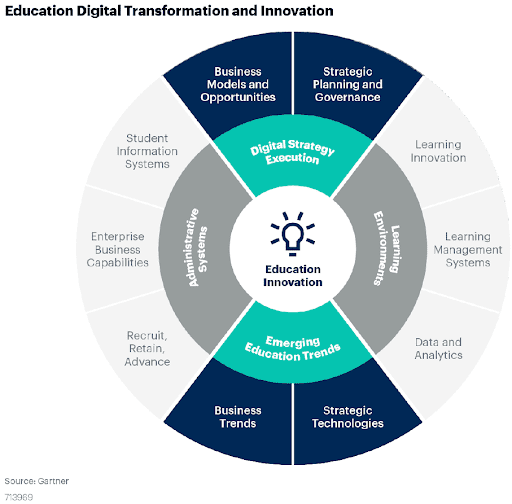
In this extremely competitive world, educational institutions must opt for technological tools that can enhance the learning experience of students along with classroom technology trends. According to Gartner, higher education CIOs should weigh recommendations in light of these trends as they shape their IT strategy and priorities. Check this blog on Top Technology Trends Impacting Higher Education in 2021 to know what Gartner has to say about this. 

Download Exclusive Gartner Reports Brought to You by Serosoft (Academia):

Gartner research reportConclusion

So, what do you think about making your institution’s classrooms tech-friendly and more advanced? Do you already have some of the above tools executed in your institution? Let’s discuss more! Contact us now! 

Technology in Education- What’s the Future!

Technology is changing every aspect of our lives, and education is one of the most important sectors that need to be modernized and advanced leading to the overall growth of the institution. Meanwhile, it is also essential that institutions must understand the right usage and importance of educational technology. Technology these days is far more than digital whiteboards, learning management systems, and such technological tools. So which technology are you using in your institution to be in the technological touch? Let’s discuss some of the important technologies and their benefits for education institutions. 

To understand it better, let’s first understand why technology is important for educational institutions.

Different technologies and their benefits in education:
  • ERP for seamless academic & administrative workings 

Various types of educational technology are evolving in the modern world that are supporting institutions, but ERP is the only and one of the leading technologies that provide complete automation of all the academic and administrative activities in the institution. It can manage all the operations like admission, enrollment, fee, hostel, library, transportation, examination, result declaration, and even alumni of the institution using a single software. A good ERP system even provides a simple and coding-free portal with a mobile application through which all the stakeholders like students, faculty, parents, administrators can manage their tasks effectively. 

  • SIS for a seamless relationship between students and faculty 

Students are one the most important stakeholders of an institution, institutions need to opt for techniques through which students can focus on their studies directly instead of indulging in day-to-day operations and tasks. A student information system is one of the leading technologies that is helping various institutions to create a systematic workflow of all the operations associated with a student. Having a student information system, institutions can attain and fill admission forms using the portal or mobile application. They can even get their enrollment numbers, can attain a systematic flow of timetable, examination details, and even the results. Institutions also get access to students’ activities from anywhere and anytime starting from their attendance to all other daily activities that are triggered for the overall growth of students and the institution. 

  • Immersive learning for the enhanced learning experience 

In the modern era of technology, learning and teaching are not only restricted to classrooms and textbooks. The students of today’s generation expect a more advanced and immersive experience that can solve their curiosity with practical solutions. 

Immersive learning provides students with real-time experiences created through augmented, VR/AR reality. These real-time experiences can transfer students virtually to the planet and help them eat up all the information to satisfy their curiosity and hunger in the best manner. 

  • Gamification for fun, and modern learning 

Games have always been the first choice of any age group, but what if students can learn and faculty can teach using modern technology? Technology is changing in every aspect and now using different technological games classrooms can be personified to make lessons more interactive and understandable along with boosting participation, encouragement, and collaboration. 

Conclusion

The Edtech world is booming now, it is the correct time for educational institutions to choose technologies that can help them in boosting the teaching and learning experience for students. What is your opinion on educational technology and its expansion, which is your favorite technology till now? Let’s discuss it in detail. Reach out to us today!

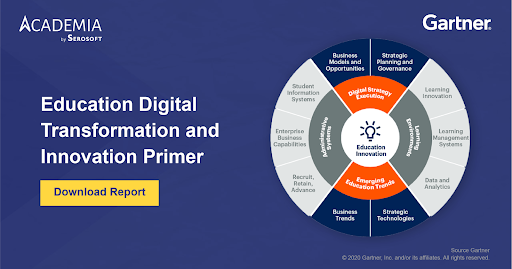
Download Exclusive Gartner Reports Brought to You by Serosoft (Academia):

Gartner-research-report